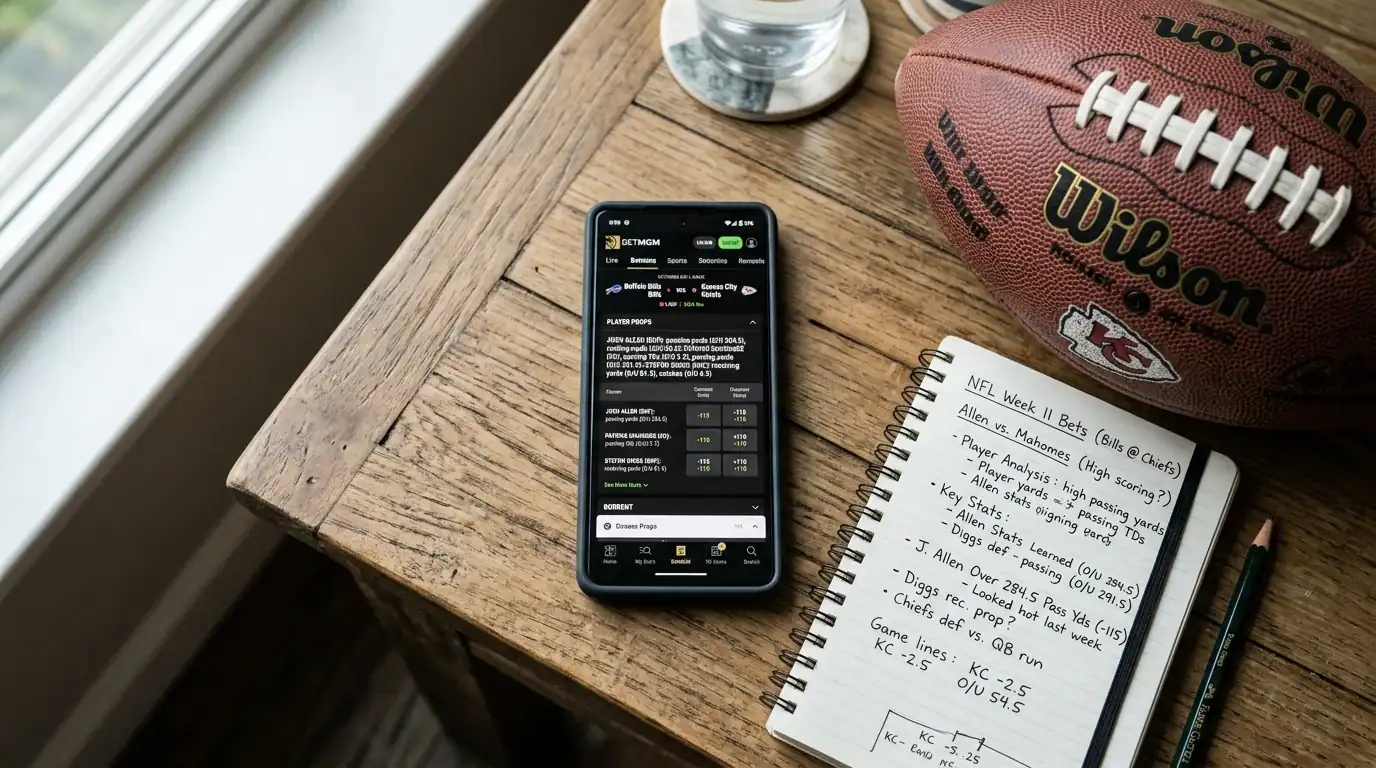
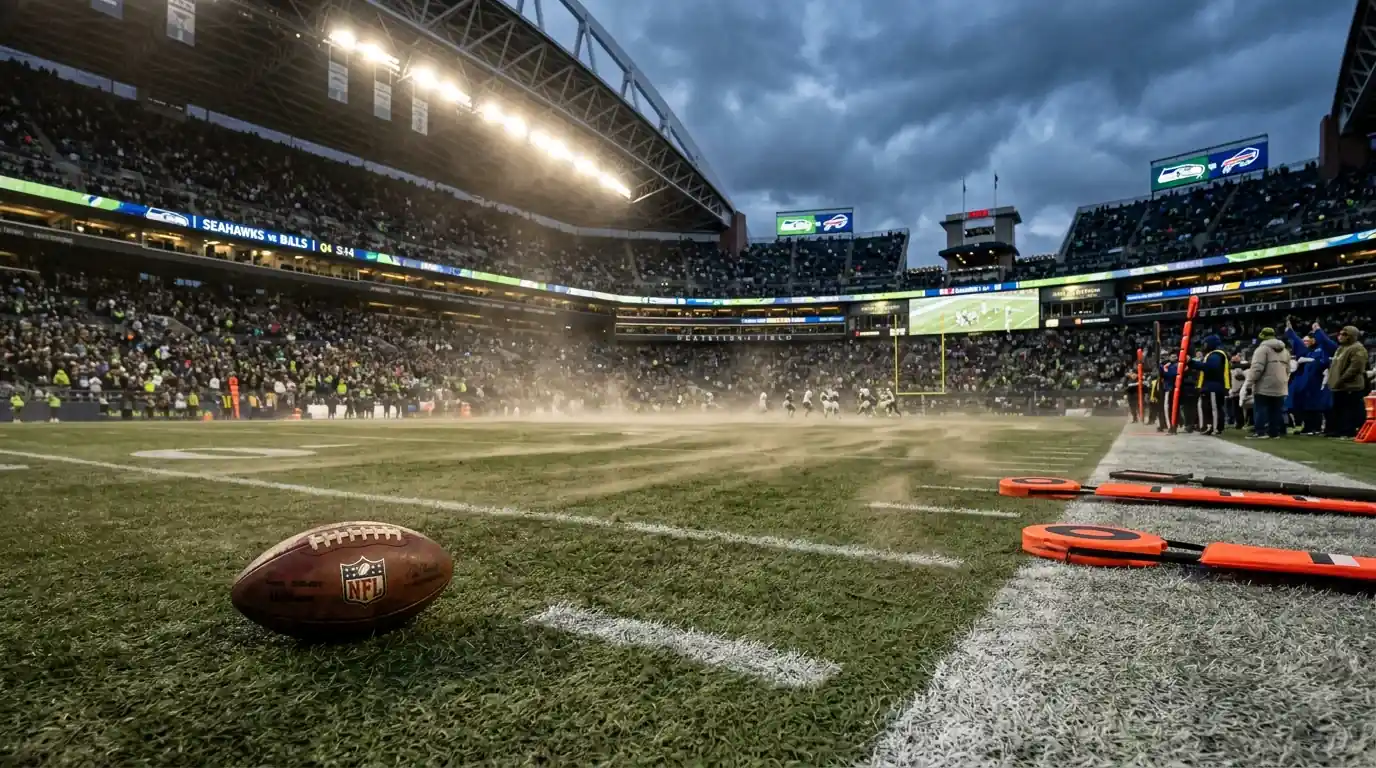
UK Weather Impact on NFL Betting: Expert Line Movements and Odds
 Available in US
Table of Contents
- Key Betting Strategies from Nine Seasons of NFL Weather Modeling
- Building a Weather Model That Actually Holds Up
- Wind Runs the Table: The Variable That Moves Lines Fastest
- Rain and Snow: Separating the Signal From the Spectacle
- Temperature Extremes: The Counter-Intuitive Cold That Pays the Over
- Dome Versus Outdoor: Twenty Open-Air Venues and the Roof That Might Not Close
- The UK Betting Landscape: Why NFL Weather Edges Land Differently Here
- London Games Meteorology: What Wembley and Tottenham Actually Deliver
- How Sportsbooks Price NFL Weather — and Where They Cannot Keep Up
- The Pre-Bet Weather Checklist: Seven Steps Before You Click Submit
- Worked Example: A Late-Season Buffalo Fixture in Practice
- Pitfalls That Drain Your Bankroll Faster Than a December Gust
- Frequently Asked Questions
- Where the Forecast Meets the Market: Your Edge Starts With Information
By NFL Weather Betting Analyst

I placed my first weather-driven NFL bet in 2017 — a December totals play on a Bills game where 25 mph gusts shredded the forecast and, as it turned out, the passing game. The under landed by fourteen points, and I spent the next three hours wondering why nobody in my circle of UK bettors had ever mentioned wind speed as a variable. Nine years later, weather analysis is the single most consistent edge in my NFL model, and it still catches the majority of the British betting public off guard.
The NFL commands a global audience of more than 218 million fans outside the United States, with the UK sitting at the heart of that international expansion. London now hosts three dedicated fixtures per season at Wembley and Tottenham Hotspur Stadium — the only purpose-built NFL venue outside North America. British interest in the sport is no longer a curiosity; it is a structural feature of the betting calendar. Yet almost every weather-betting resource available online is written for an American audience, calibrated to American sportsbooks, and oblivious to the quirks of the UK market.
This guide is built for UK-based NFL bettors who want a rigorous, data-backed framework for integrating weather into their handicapping. It draws on peer-reviewed research, sportsbook insider commentary, and nine seasons of personal weather modelling. Every statistic cited comes from named sources — no vague “studies show” hand-waving. Where a topic warrants deeper treatment, I link to the dedicated article within this site rather than attempting to cover everything in a single pass.
What follows is an analytical framework, not a tipsheet. I will walk through each weather variable — wind, precipitation, temperature — with hard numbers, then place those variables inside the context that matters to you: the UK sportsbook ecosystem, London Games meteorology, and the line-setting mechanics that determine whether your edge survives the vig.
Key Betting Strategies from Nine Seasons of NFL Weather Modeling
- Wind is the dominant variable: at 20 mph sustained, the under hits 54% of the time, and completion rate drops from 60.3% to roughly 54.65%. Above 25 mph, passing production falls by more than 10%.
- Heavy snow cuts NFL scoring by 25%, but light snow reduces it by just 2%. The distinction between severity levels is where most bettors lose money.
- Sub-zero temperatures with no wind or snow favour the over in 60% of cases — a counter-intuitive pattern the market consistently misprices.
- UK sportsbooks lag the US market by 12-24 hours on weather-driven line moves, creating a repeatable information edge for bettors who check Saturday evening forecasts.
- The UK betting market generates 16.8 billion pounds in annual gross gaming yield, with NFL as a fast-growing segment. More uninformed volume means more exploitable inefficiency around weather events.
Building a Weather Model That Actually Holds Up
Back in 2019, I lost three consecutive weather-driven bets in a single weekend because I had been eyeballing forecasts and making gut calls. Light rain in Jacksonville, a “breezy” afternoon in Chicago, a cold snap in Green Bay — I backed the under in all three, and all three went over. The lesson was painful but permanent: weather handicapping without a framework is just dressed-up gambling.
The foundation of any credible weather model is historical data at scale. An analysis of more than 13,000 NFL matches stretching back to 1966 confirms that wind speed and temperature are statistically significant predictors of scoring output. That dataset, sourced from NFL game logs and cross-referenced with National Weather Service records, gives us enough sample size to distinguish genuine patterns from noise. Without that baseline, you are trading on anecdotes.
A weather model for NFL betting is not a forecast — it is a filter. You are not predicting the weather; you are measuring how a given forecast deviates from the historical norm for that stadium, that month, and that kickoff time, then asking whether the current line reflects that deviation.
The framework I use has three layers. First, establish the baseline: what does a typical game at this venue look like in terms of wind, precipitation, and temperature during this week of the season? Second, measure the deviation: how far does the current forecast sit from that baseline, expressed in percentiles rather than raw numbers? A 15 mph wind in Buffalo in December is unremarkable; the same reading at SoFi Stadium in September is an outlier. Third, check the line: has the sportsbook already priced in the deviation, or is there a gap between the forecast and the market?
Ivetta Abramyan, meteorologist and co-founder of Bettor Weather, put it well: “You could do all your homework and have good confidence in what the weather’s going to do. But as far as how it impacts the game, at the end of the day, you still only have a handful of games that have been played that fit that specific criteria.” That honest caveat is worth remembering. Weather data narrows the variance — it does not eliminate it. My model has a win rate above break-even precisely because I treat it as a probabilistic edge, not a certainty.
Wind Runs the Table: The Variable That Moves Lines Fastest
In December 2022, a winter storm barrelled across the Great Lakes and the NFL weather community watched the totals for three games fall off a cliff inside 48 hours. Kevin Roth, chief meteorologist at RotoGrinders, described it bluntly: “The totals opened and fell off a cliff.” That single weekend crystallised something I had been tracking for years — wind is not just one variable among many. It is the primary driver of weather-related line movement in professional football.
The average wind speed across NFL game sites sits at roughly 7 mph — a breeze most spectators would not notice. At that baseline, the passing game operates normally and kickers rarely complain. The trouble starts at 15 mph, where completion percentage drops by approximately 1.6 percentage points compared to calm conditions. That sounds modest until you translate it into a full game’s worth of possessions: fewer completions mean fewer first downs, shorter drives, and fewer points.
15 mph sustained
Completion percentage dips by roughly 1.6 percentage points. The first threshold worth noting.
20 mph sustained
The under hits in 54% of games since 2015. Completion rate falls from a baseline 60.3% to around 54.65% over a five-season sample.
25+ mph sustained
Passing production drops by more than 10%. Running backs gain an average of five additional fantasy points per game.
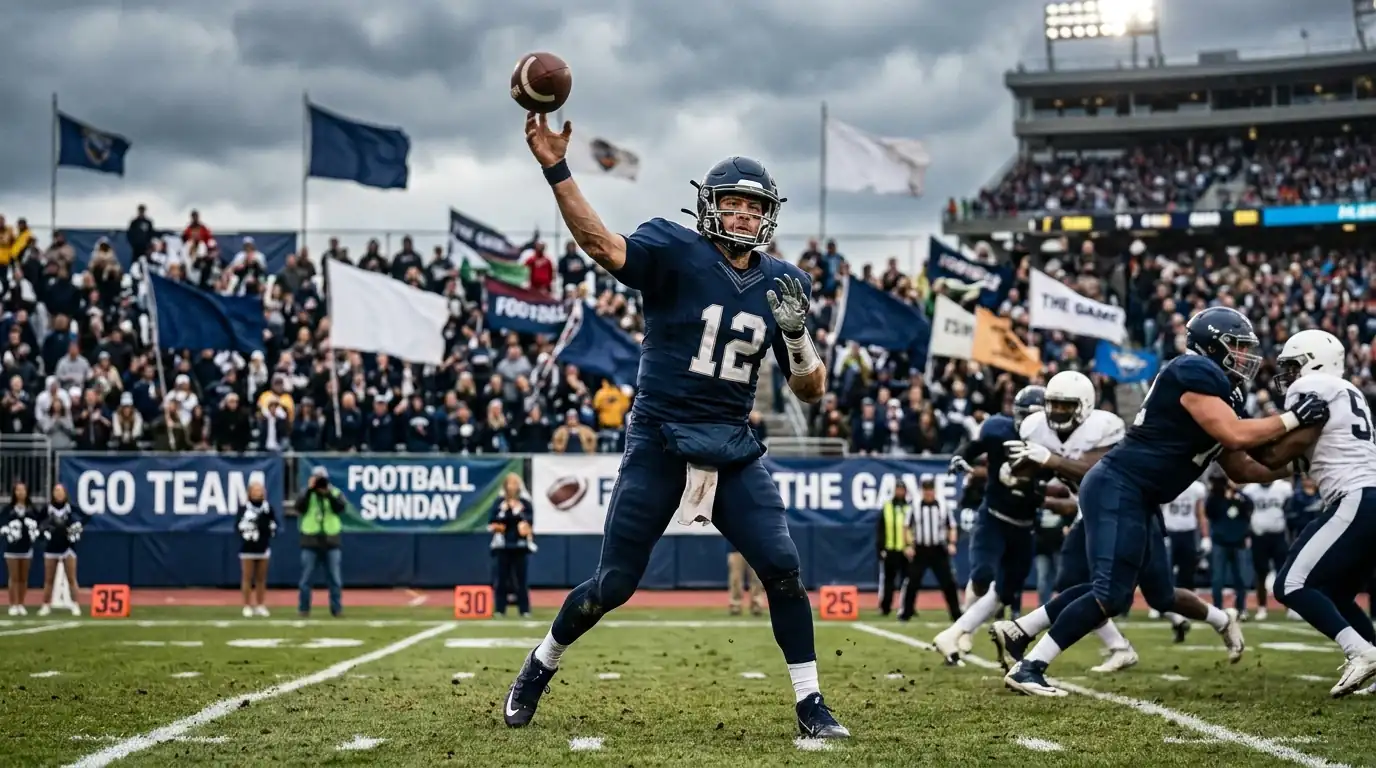
Every 5 mph of wind costs the passing game roughly 2-3 percentage points of completion rate. That relationship is close to linear up to about 20 mph, then accelerates — the drop from 20 to 25 mph is 1.5 to 2 times steeper than the drop from 15 to 20. This non-linearity is critical. A bettor who treats 15 mph and 25 mph as the same “windy game” is leaving money on the table, because sportsbooks certainly do not treat them equally.
Ed Salmons, VP of risk management at the Westgate SuperBook, has explained the sharp-money dynamic around wind forecasts: “The wind factor is what people are really looking for. Each stadium is different with the wind, but if you see a front that’ll be heading through during the game, the wise guys are gonna see that. If the game is on Sunday, they’ll start hammering it around six days before kickoff.” That six-day window is the one I watch most closely from a UK timezone. By the time the forecast firms up on Saturday, the line has often already moved.
Hypothetical line movement on a windy forecast
Opening total: O/U 47.5
Tuesday forecast: 22 mph sustained wind
Thursday total: O/U 44.5 (3-point drop)
Saturday forecast firms: 24 mph gusts
Closing total: O/U 43.0 (4.5-point total drop from open)
If you backed the under at 47.5 on Tuesday, you captured value that evaporated by Thursday.
For a deeper breakdown of each mph threshold and how crosswind differs from headwind for both quarterbacks and kickers, I have written a dedicated piece covering NFL wind speed betting thresholds from 15 mph to 25 mph and beyond. What matters here, at the framework level, is the hierarchy: wind first, everything else second.
Rain and Snow: Separating the Signal From the Spectacle
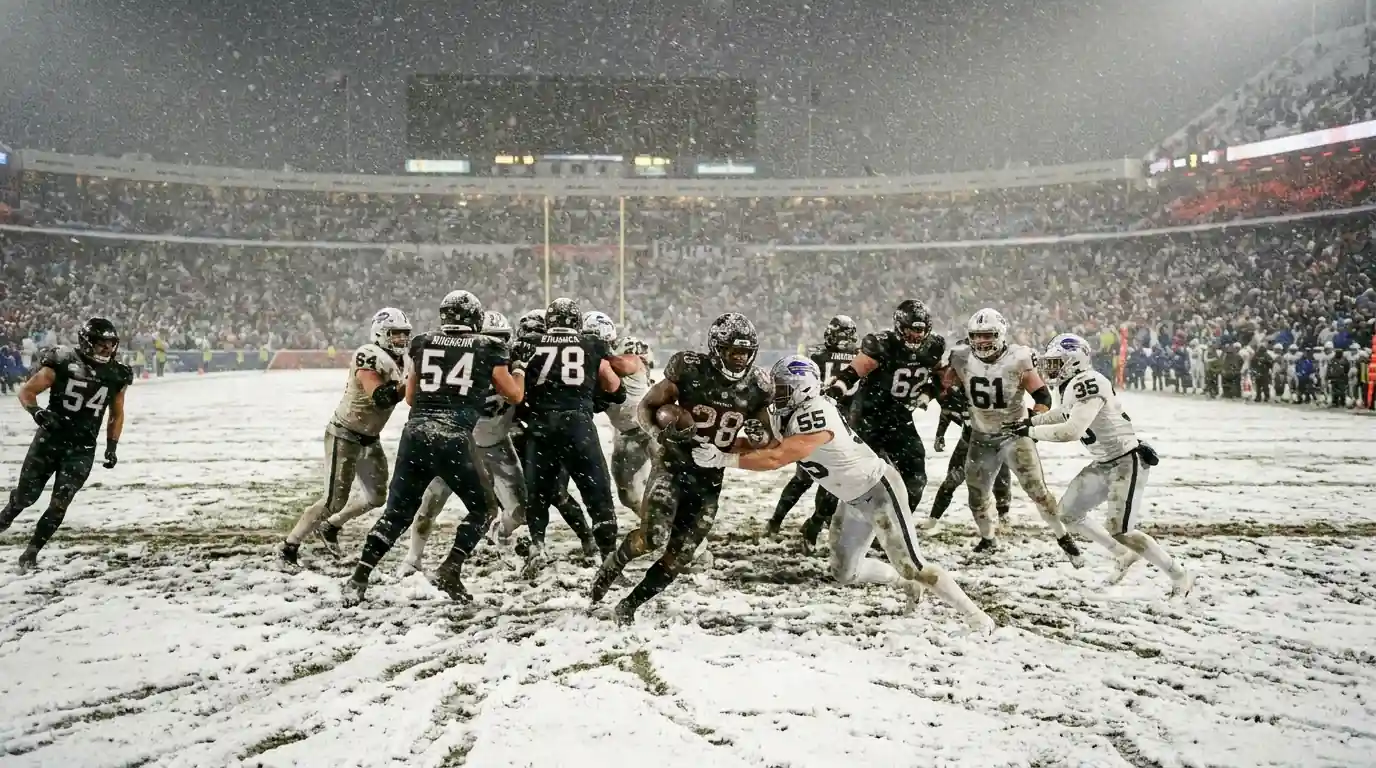
Snow games are the NFL’s great theatre — cameras linger on flakes swirling under floodlights, commentators invoke the Ice Bowl, and social media fills with clips of players sliding across frozen turf. I love watching them. I also know that the visual drama of precipitation fools more bettors than any other weather variable, because most people fail to distinguish between light and heavy.
Heavy snowfall cuts NFL scoring by roughly 25%. That is an enormous effect, large enough to move a total by eight to ten points depending on the matchup. Field goal conversion drops from the league average of 83% to approximately 76% in snow — a seven-percentage-point decline that makes every red zone drive riskier and every fourth-down decision more consequential. These are the conditions that produce genuinely lopsided under results, and they deserve respect.
Light snow, by contrast, reduces scoring by just 2%. Two percent. That is the difference between a 45-point combined score and a 44-point combined score — well within the noise of any individual game. Yet I have watched UK-side totals drop three or four points on the mere mention of snow in the forecast, regardless of intensity. The word “snow” triggers a reflexive under bias in the recreational market that sharp bettors exploit season after season.
| Precipitation type | Average scoring reduction |
|---|---|
| Light rain or light snow | Roughly 2 points |
| Moderate rain | Roughly 4 points |
| Moderate snow | Roughly 6 points |
| Heavy rain | Roughly 6 points |
| Heavy snow | Roughly 10 points |
Rain brings its own complications, but the headline finding surprised me when I first encountered it: the bulk of the scoring reduction in rainy games is attributable to accompanying wind, not the rain itself. Rain alone cuts passing production by about 12%, but isolating rain from wind is difficult in practice because the two almost always co-occur. Teams lose an average of 45 passing yards in wet conditions, and the drop rate — receivers failing to secure catchable throws — climbs to around 6% in rain or snow, roughly double the dry-weather baseline. Those fumbled opportunities compound across a game, but they do not produce the catastrophic scoring collapses that heavy snow does.
When forecasts call for rain, the public hammers the under so predictably that the closing line often overshoots the actual weather impact. If you spot light-to-moderate rain with low wind, the over can carry value precisely because everyone else has already priced in a monsoon.
For a full breakdown of how to read precipitation severity, the 25% heavy-snow rule, and the hidden wind overlap in rain games, the dedicated NFL snow and rain betting strategy article covers each scenario in detail. At the framework level, the rule is simple: check the intensity before you check the type.
Temperature Extremes: The Counter-Intuitive Cold That Pays the Over
I nearly abandoned cold-weather modelling in my third season of tracking it. The results kept contradicting the narrative. Every pundit repeated the same line: cold kills scoring, back the under. Yet my spreadsheet kept showing overs cashing in freezing games that had no wind and no snow. It took a full year before I trusted the pattern enough to bet on it.
The conventional wisdom is not wrong in aggregate. Temperatures above 85 degrees Fahrenheit (29 degrees Celsius) or below 25 degrees Fahrenheit (-4 degrees Celsius) do reduce scoring by approximately 8%. The moderate cold band between 25 and 50 degrees Fahrenheit (-4 to 10 degrees Celsius) produces a more modest 5% scoring dip. Below freezing, passing efficiency declines by 10-15% as grip deteriorates, ball velocity drops, and receivers run routes on uncertain footing. All of that is well established and widely known.
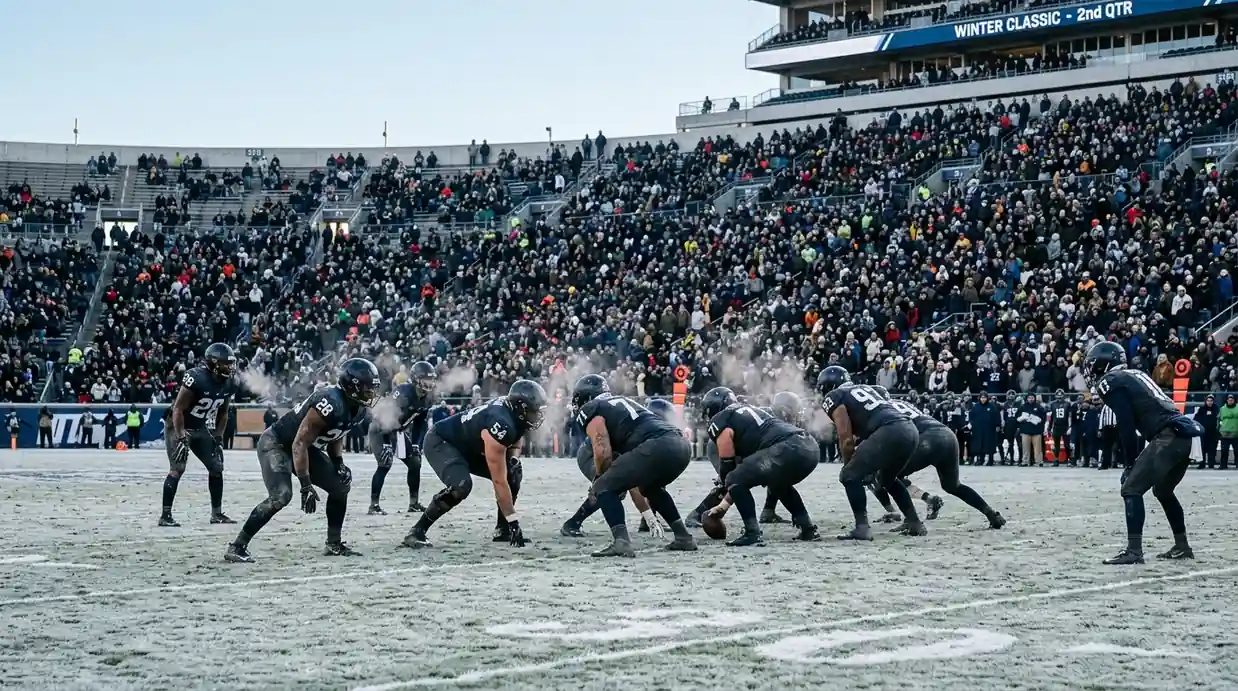
Here is where it gets interesting. Chad Nagel’s analysis of decades of NFL data found that when the temperature drops below 0 degrees Celsius but there is no snow and no significant wind, the over hits in 60% of cases. Sixty percent. That is a substantial edge, and it exists because the market has already overreacted to the temperature reading on its own. Sportsbooks see “freezing” and shade the total downward; recreational bettors see “freezing” and pile onto the under. When the actual game unfolds in cold but calm conditions, scoring holds closer to normal than anyone expected.
The cold-over pattern is conditional. It requires the absence of wind and snow. Add 15 mph gusts to a sub-zero game and the scoring collapse is real. The edge comes from identifying cold games where the thermometer is the only adverse factor — and the market has priced in the full weather package regardless.
A peer-reviewed study published in the journal Temperature through Taylor and Francis in 2025 added academic weight to the temperature question. Analysing NFL game data from 2017 to 2025, researchers found that teams from northern states (above the 39th parallel) saw their winning probability decrease as game-time temperature rose, with an odds ratio of 0.974 and a p-value of .026. The reverse also held: northern rosters travelling south to play in heat performed measurably worse. The point differential for northern teams showed a statistically significant negative association with rising temperature when playing at southern venues. This is not a blog post finding — it is peer-reviewed, controlled analysis with named variables and confidence intervals.
Ed Salmons of the Westgate SuperBook has noted that totals for games in historically cold cities — Cleveland, Buffalo, Pittsburgh, Foxborough — start dropping after Thanksgiving “just in case the weather is crappy.” That seasonal adjustment is a standing feature of NFL line-setting, and it means the easy value in cold-weather unders is often gone before the forecast even arrives.
The full picture of cold-weather totals, the northern versus southern roster dynamic, and the wind-chill question is covered in the dedicated cold weather NFL totals and spreads playbook. For now, the framework takeaway is this: temperature matters, but only in combination with other variables. Isolated cold is not the under play the public assumes it to be.
Dome Versus Outdoor: Twenty Open-Air Venues and the Roof That Might Not Close
A friend of mine lost a hefty accumulator in January 2024 because he forgot to check whether the retractable roof at a southern stadium would be open or closed. The total swung by three points in the final 90 minutes before kickoff, and his leg died with it. It was a rookie error, but it highlights a dimension of NFL weather betting that has no parallel in Premier League or rugby markets: half the league plays outdoors and half plays in climate-controlled domes, and the distinction reshapes every weather-related calculation.
The NFL currently operates 30 stadiums, of which 20 are fully open-air. Ten venues have either a fixed dome or a retractable roof, including five with retractable systems that can be opened or closed depending on conditions. The NFL’s own rule for retractable roofs is specific: the roof stays open unless there are active precipitation or lightning threats, the temperature falls below 40 degrees Fahrenheit (4 degrees Celsius), or wind gusts exceed 40 mph. That decision is made 90 minutes before kickoff — a tight window that creates a late-breaking information edge for bettors who are watching.
| Stadium type | Count | Weather exposure |
|---|---|---|
| Open-air | 20 | Full exposure to all weather variables |
| Fixed dome | 5 | No weather exposure; controlled environment |
| Retractable roof | 5 | Variable; depends on 90-minute pre-kickoff decision |
The dome-team dynamic cuts both ways. Teams that play their home games indoors — think of franchises in Atlanta, Las Vegas, or Minneapolis — acclimatise to controlled conditions. When those rosters travel to an open-air stadium in December, they face a double disadvantage: the weather itself and the unfamiliarity of playing in it. The market is broadly aware of this pattern, but the degree to which it is priced in varies by sportsbook and by week. I have found the most reliable edges on dome-team road games in late November and December, when cold-weather cities hit their seasonal floor and the indoor team’s spread fails to account for the full environmental gap.
For UK bettors, the practical question is whether your sportsbook reflects the roof decision in the line quickly enough for you to act. Some do; some lag by an hour or more. That lag is one of the structural inefficiencies I discuss further in the UK sportsbook weather line movement article.
The UK Betting Landscape: Why NFL Weather Edges Land Differently Here
When I explain my NFL weather model to American bettors, they nod along. When I explain it to British bettors, the first question is always the same: “But do UK bookmakers even move their NFL lines on weather?” The answer reveals a structural opportunity that most UK-based handicappers have never considered.
The UK sports betting market generates approximately 16.8 billion pounds in gross gaming yield per year, with football — soccer, that is — accounting for around 1.1 billion of that total. The market processes some 290 million online bets every month, and roughly 10% of the UK adult population places wagers online. This is a mature, liquid, heavily regulated ecosystem that expanded from 2.29 billion dollars in 2017 to 4.21 billion dollars by 2023, with projections pointing toward 5.69 billion dollars by 2029.
16.8 billion pounds
Annual gross gaming yield across UK sports betting
290 million
Online bets placed per month by UK punters
68%
Share of surveyed UK bettors planning to increase wagers in the 2026 sporting calendar
NFL sits within that market as a fast-growing but still secondary sport. The league’s own data claims 218 million fans outside the United States, and the UK is the single largest international market by engagement. Dominic Crosthwaite, chief trading officer at Flutter Entertainment, has described the opportunity in explicitly commercial terms: the NFL’s UK popularity plays to the strength of Flutter’s global scale and shared innovations. When the parent company of Paddy Power and Betfair frames American football as a strategic growth vector, it tells you something about where handle is heading.
A February 2026 survey found that 68% of UK bettors plan to increase their wagering activity across the sporting calendar. That expanding pool of money flowing into NFL markets creates both more liquidity and more uninformed volume — exactly the conditions in which a weather-based edge thrives.
The structural gap for UK bettors is information asymmetry. American sharp bettors have direct access to the National Weather Service, stadium-specific wind models, and a culture of weather handicapping that stretches back decades. British punters, by contrast, are working across a five-to-eight-hour time difference, often placing bets on Thursday or Friday UK time for games that kick off on Sunday evening. If the weather forecast shifts on Saturday afternoon Eastern Time, that is Saturday evening or Sunday morning in London — and many UK bettors have already locked in their positions.
That lag is not a disadvantage. It is an opportunity. If you are the UK bettor who checks the updated forecast at 10 pm GMT on Saturday while the rest of the market has already committed, you are operating on better information than the majority of the pool. The edge is not exotic; it is logistical.
London Games Meteorology: What Wembley and Tottenham Actually Deliver
I attended the 2023 London Games at Tottenham Hotspur Stadium on a day when the forecast called for intermittent rain and 12-degree temperatures. The American fans around me were bundled up as if preparing for a polar expedition. The British fans were in shirtsleeves. That cultural gap in weather perception extends directly into the betting market, and it creates a subtle but persistent information edge for anyone who actually understands London’s autumn climate.
The NFL’s London fixtures fall in October, when average daytime temperatures in the capital sit between 10 and 15 degrees Celsius (50-59 degrees Fahrenheit) and rainfall is moderate but frequent. Compared to the weather profiles of typical American host cities during the same period — think of early-season games in Miami at 30 degrees Celsius or late-October games in Green Bay already approaching freezing — London occupies a narrow, mild band. Wind speeds in central London rarely exceed 15 mph at ground level, though Wembley’s open bowl design can funnel gusts in ways that the surrounding urban landscape does not.
Tottenham Hotspur Stadium is the only venue outside the United States purpose-built for American football. Its retractable grass pitch rolls out to reveal a synthetic NFL surface underneath, and the stadium’s orientation and partial roof coverage create a microclimate distinct from Wembley’s fully open bowl.
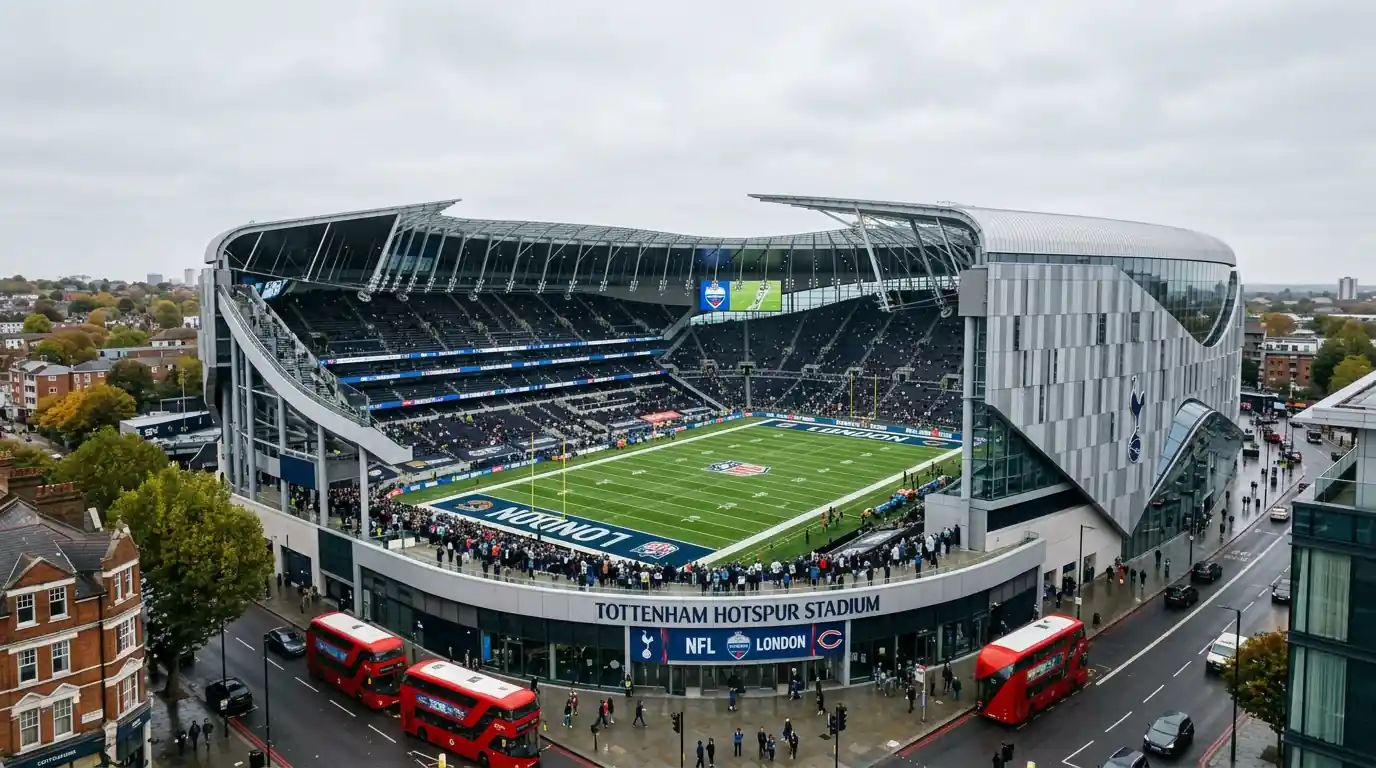
The 2025 season featured three London fixtures alongside a record seven international games overall, and the trajectory points toward further expansion. Robin Sherry, founder and CEO of Seat Unique, has observed that 40% of traffic to their NFL pages comes from outside the UK, with every third hospitality package purchased by an international client. The London Games have become, in Sherry’s words, a “global destination event” where fans travel further, stay longer, and prioritise premium experiences around the game itself. That commercial momentum guarantees the fixtures will keep coming — and with them, a set of weather conditions that NFL teams rarely encounter anywhere else on their schedule.
London’s autumn weather is mild by NFL standards, which means the standard weather adjustments for cold and wind that dominate late-season American games rarely apply here. The risk for UK bettors is over-adjusting: applying heavy-weather discounts to a London fixture that will play out in conditions most NFL teams would consider perfectly comfortable.
For a full stadium-by-stadium breakdown of how London’s venues compare to their American counterparts and how kickoff timing interacts with evening weather shifts, the NFL London Games weather betting guide covers the topic in granular detail.
How Sportsbooks Price NFL Weather — and Where They Cannot Keep Up
I used to assume that by the time I saw a weather forecast, the bookmaker had already baked it into the line. That assumption cost me two full seasons of missed value. The reality is far messier — and far more exploitable.
Ed Salmons at the Westgate SuperBook has described the seasonal baseline that oddsmakers use: games in historically bad-weather cities like Cleveland, Buffalo, Pittsburgh, and Foxborough are set slightly lower after Thanksgiving “just in case the weather is crappy.” That pre-emptive shading means the obvious cold-city unders are often thin on value by the time December arrives. The market has learned the lesson at the macro level.
Where the market struggles is at the micro level — specific forecasts for specific games in specific weeks. Chris Bennett, sportsbook director at Circa Sports, has been unusually candid about this limitation: “In practice, it’s almost impossible for the sportsbook to really put themselves in a good position and to be ahead of every customer on the evolving weather forecast.” That admission from one of the sharpest books in the world tells you everything you need to know about the opportunity. If Circa cannot perfectly price weather in real time, the high-street UK sportsbook importing its lines from Nevada with a five-hour delay certainly cannot either.
The six-day pattern in practice
Monday: Total opens at 46.5 based on team strength and situational factors
Tuesday: Weather models show a developing storm system. Sharp bettors begin hitting the under.
Wednesday-Thursday: Line drops to 44.0. The storm system firms up.
Friday: UK sportsbooks adjust to 43.5, lagging the US market by 12-24 hours.
Saturday evening UK time: Final forecast refines wind speed upward. A window opens before UK books catch up on Sunday morning.
Closing line value (CLV) — the difference between the odds at which you placed your bet and the final odds at market close. Consistently beating the closing line is the single most reliable indicator of long-term profitability in sports betting. Weather-driven bets aim to capture CLV by acting on forecast information before the line fully adjusts.
The practical implication for UK bettors is timing. If you are placing your NFL bets on Friday evening, you are betting into a line that reflects Tuesday’s weather models. If you wait until Saturday night or Sunday morning to check the updated forecast, you can often find that the line has not yet caught up — particularly on UK-licensed platforms that do not employ dedicated NFL weather traders.
The Pre-Bet Weather Checklist: Seven Steps Before You Click Submit
After nine years of weather modelling, I have compressed my pre-bet routine into a checklist I run for every outdoor NFL game. It takes about four minutes per fixture and has prevented more bad bets than any single statistical insight. I keep it pinned above my desk during the season, and I am sharing it here because the discipline of a routine matters more than any individual data point.
Run this checklist for every outdoor NFL game before placing any weather-sensitive bet
- Confirm the venue is open-air. If retractable, check whether the roof decision has been announced — the call is made 90 minutes before kickoff. If the roof is closing, your weather thesis is void.
- Pull the current forecast for game time, not just the daily summary. Hourly wind speed, precipitation probability, and temperature at kickoff plus three hours is the minimum data set you need.
- Check sustained wind speed against the 15 mph floor. Below 15 mph sustained, the weather impact on the passing game is marginal and unlikely to produce a tradeable edge.
- Distinguish precipitation intensity. Light rain or light snow warrants a 2-point mental adjustment at most. Heavy snow warrants 8-10 points. Do not treat them as the same condition.
- Ask whether the temperature is cold in isolation or cold with wind and precipitation. Sub-zero Celsius with calm winds has a different profile — historically favouring the over — than sub-zero with 20 mph gusts.
- Check when the line last moved. If the total has already dropped 3-4 points from its opening, the weather may be fully priced in. You are looking for a gap between the forecast and the current number, not between the forecast and the opening number.
- Compare the game-time forecast to the historical baseline for that stadium in that calendar week. A 12 mph wind at Highmark Stadium in December is normal; the same reading at SoFi Stadium in September is unusual. The deviation matters more than the raw number.
NFL Stadium Weather Risk Finder
Pick a team to see its stadium’s roof type and how much weather typically matters there.
—
—
Risk ratings reflect general seasonal climate patterns at each venue, not a live forecast — always check the actual game-time conditions before betting. For informational purposes only. 18+ Please gamble responsibly.
This checklist is a filter, not a trigger. It does not tell you to bet — it tells you whether the weather component of your analysis is grounded in specifics rather than vibes. Most weeks, only two or three games on the full NFL slate have weather conditions extreme enough to warrant a weather-driven position.
Worked Example: A Late-Season Buffalo Fixture in Practice
Theory is useful. Practice is what pays out. Let me walk through a real-world scenario based on a composite of Buffalo home games I have tracked across several seasons, illustrating how the framework operates from Tuesday forecast to Sunday result.
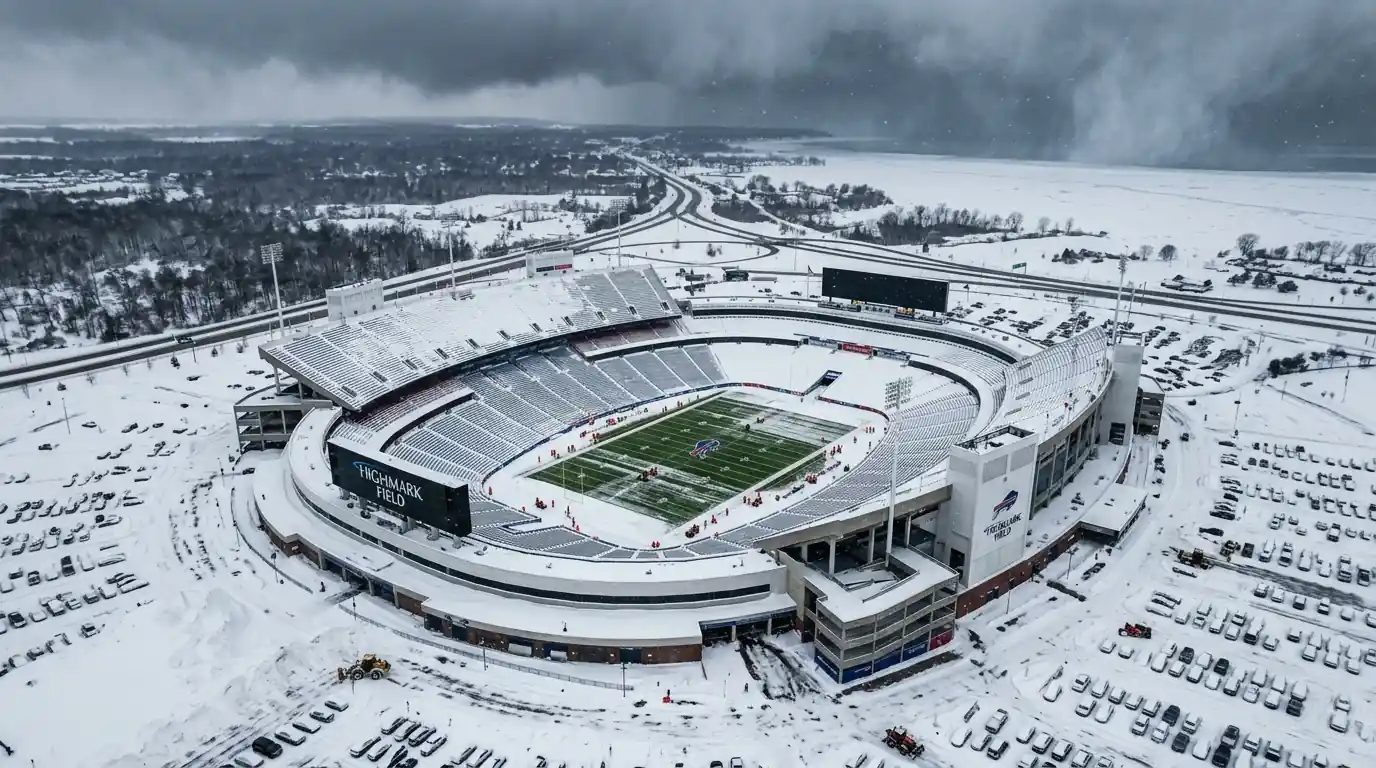
Scenario: Week 15 Buffalo Bills home game, mid-December
Step 1 — Venue check. Highmark Stadium is fully open-air, one of the most weather-exposed venues in the NFL, situated in the Lake Erie snow belt. No retractable roof to worry about. Weather is a factor in nearly every late-season game here.
Step 2 — Tuesday forecast. The National Weather Service shows a developing lake-effect snow band with sustained winds of 18-22 mph and temperatures around 25 degrees Fahrenheit (-4 degrees Celsius). Heavy snow accumulation is possible but uncertain — the band could track north of the stadium.
Step 3 — Apply the checklist. Wind at 18-22 mph crosses the 15 mph floor and approaches the 20 mph threshold where the under historically hits 54% of the time. Heavy snow, if it materialises, would imply a 25% scoring reduction. Temperature is in the sub-32 degrees Fahrenheit zone, where passing efficiency drops 10-15%. Multiple variables are stacking.
Step 4 — Check the line. The total opened at 45.5. By Tuesday evening, it has already moved to 43.5. Sharp money has acted on the early forecast. But the snow band’s path is still uncertain, so the line has not fully committed to a blizzard scenario.
Step 5 — Thursday update. The forecast firms: the snow band is now tracking directly over Orchard Park. Sustained wind revised upward to 22 mph with gusts to 30. Heavy snow expected from the second quarter onward. Total drops to 41.0.
Step 6 — Saturday night UK time. Final forecast confirmed: heavy snow, 24 mph sustained, wind chill minus 15 degrees Fahrenheit. Passing production in these combined conditions historically drops more than 10%, and field goal conversion in snow sits at 76% versus the league’s 83% baseline.
Step 7 — Decision. If the total is still at 41.0 or above, the under has value. The combination of heavy snow (minus 10 points from baseline), 22+ mph wind (further suppression of the passing game), and sub-freezing temperature (compounding grip and efficiency loss) suggests a combined total closer to 34-38 points. If the line has already dropped to 38.0, the value is gone — the market has caught up.
The key lesson is that the framework is sequential. You check wind first, then precipitation, then temperature, then the line, then the deviation from historical norms. Each layer either strengthens the case or weakens it, and at each stage you ask: does the market already know what I know?
Pitfalls That Drain Your Bankroll Faster Than a December Gust
I have made every mistake on this list at least once. Some of them I made for an entire season before the cumulative losses forced me to confront the pattern. Weather betting rewards discipline and punishes shortcuts, and the most common shortcuts are so intuitive that they feel like smart analysis right up until the moment they cost you money.
The single most expensive pitfall: treating all precipitation as equal. I have already covered the light-versus-heavy distinction, but it bears repeating in the context of common errors. A 30% chance of light rain is not a weather event. A confirmed heavy-snow band with 25 mph wind is a weather event. The number of UK bettors who adjust their totals play based on a rain icon in a weather app — without checking intensity, duration, or accompanying wind — is staggering, and it inflates the under market in games where the actual scoring impact is negligible.
The second pitfall is ignoring line movement that has already occurred. If a total has dropped four points since opening, the weather is priced in. You are buying at the new market price and hoping the weather overperforms the already-adjusted expectation. I track the opening line for every outdoor game to measure how much weather the market has absorbed before I act.
Third, relying on a single forecast source. Ivetta Abramyan has made this point: even with thorough homework, you are working with a small sample of comparable games for any specific set of conditions. I cross-reference at least two sources — typically the National Weather Service for US venues and the Met Office for London fixtures — and I never treat a Tuesday forecast as final.
Fourth, forgetting drop-rate compounding. Drops rise to roughly 6% in wet conditions, and those lost receptions kill drives, shift field position, and reduce scoring opportunities for both teams. If you are betting player props in precipitation, the drop-rate uplift suppresses receiving yards and touchdown probability in ways headline weather stats do not capture.
Finally, applying weather analysis to dome games. It sounds obvious, but I have seen it happen. A snowstorm in Minneapolis does not affect a game being played under the fixed dome at U.S. Bank Stadium. Check the venue type before you check the forecast. Always.
Frequently Asked Questions
How much does wind actually affect NFL scoring?
Wind is the single most impactful weather variable. At 15 mph sustained, completion percentage drops by roughly 1.6 percentage points. At 20 mph, the under hits in 54% of games since 2015. Above 25 mph, passing production falls by more than 10% and the kicking game becomes unreliable at distance. The impact accelerates sharply above 20 mph — that non-linear jump is why the 20 mph threshold matters more than any other single number in weather handicapping.
Should UK bettors always back the under in bad-weather NFL games?
No. Light precipitation reduces scoring by only about 2 points on average — well within normal variance. The under is strong in heavy snow (scoring drops roughly 25%) and sustained wind above 20 mph, but those conditions apply to only a few games per season. In cold games with no wind or snow, the over hits approximately 60% of the time because the market overreacts to the temperature reading alone. The rule is: check intensity and combination of variables, then see whether the line has already adjusted.
Do sportsbooks already factor weather into NFL betting lines?
Partially. Sportsbooks apply seasonal baselines — totals for cold-weather cities drop after Thanksgiving by default. When a specific event is forecast, sharp bettors move lines as early as six days before kickoff. However, Chris Bennett of Circa Sports has acknowledged that it is “almost impossible for the sportsbook to really put themselves in a good position and to be ahead of every customer on the evolving weather forecast.” UK-licensed platforms, importing lines from the US with a time lag, are slower still. The gap between forecast and line is where the edge lives.
Which NFL teams perform best in cold weather?
Teams from northern states — above the 39th parallel — have a measurable edge in cold conditions. A peer-reviewed study in the journal Temperature found that northern rosters saw their point differential decline when travelling to warmer venues, with a statistically significant effect. The advantage extends beyond familiarity to roster construction and game-planning built around diminished passing efficiency. Buffalo, Green Bay, Chicago, Pittsburgh, and New England have historically been the strongest cold-weather performers.
How does snow affect NFL field-goal kicking?
Field goal conversion in snow drops to approximately 76%, versus the league average of 83%. The effect is most pronounced on longer attempts, where reduced visibility and uncertain footing compound the difficulty. In heavy snow, coaches are more likely to go for it on fourth down rather than attempt field goals beyond 40 yards, shifting scoring toward touchdowns and away from three-point plays. Red zone efficiency changes shape: teams either score seven or score zero, with fewer field goals in between.
How early in a forecast should I act on wind for NFL bets?
The sharp-money pattern, based on sportsbook insider commentary, is that professional bettors begin acting on wind forecasts roughly six days before kickoff — typically on a Tuesday for a Sunday game. By Thursday, the initial line movement has usually occurred. For UK bettors, the practical window depends on your sportsbook’s responsiveness: some UK-licensed platforms lag the US market by 12-24 hours on weather-driven line moves. If you can check the updated forecast on Saturday evening UK time and compare it to your book’s current line, you often find a gap that will close by Sunday morning. The earlier you act relative to the forecast firming up, the more closing line value you are likely to capture.
Are dome teams at a disadvantage in outdoor cold-weather games?
Yes. Teams that play home games in climate-controlled environments lack the acclimatisation that outdoor teams develop through regular exposure. The effect is most pronounced in late-season games below freezing with wind or snow present. Whether the disadvantage is fully reflected in the spread depends on the week and the sportsbook — it tends to be under-priced in early cold snaps and more accurately priced by the playoff stretch.
Where the Forecast Meets the Market: Your Edge Starts With Information
The global sports betting market stood at 100.9 billion dollars in 2024 and is projected to reach 258.1 billion by 2033. The NFL alone accounted for roughly 30 billion dollars in legal US handle during the 2025 season, an 8.5% increase year-on-year, and the league’s international expansion shows no sign of slowing. British bettors are not peripheral participants in this growth — they are among its primary beneficiaries, operating in a regulated market with deep liquidity and access to a sport whose weather dynamics remain under-exploited by the UK betting public.
Weather analysis is not a magic formula. It is a disciplinary framework that converts publicly available meteorological data into a structured assessment of whether the current line reflects the conditions that will actually exist at kickoff. Wind moves lines the fastest and deserves the most attention. Precipitation demands severity checks, not headline reactions. Temperature plays a subtler game, especially in the counter-intuitive zone where cold alone favours the over. And the UK market’s structural time lag against the US origination of NFL lines creates a specific, repeatable information edge for any bettor disciplined enough to check the forecast one more time before committing.
The framework is here. The data is sourced. The checklist is ready. What happens next depends on whether you treat this as something you read once or something you apply every Sunday from September to February.
Created by the ”Weather Impact on nfl Betting” editorial team.